
New visa fee reimbursement scheme for UK scale-ups
The UK Government has launched a new Visa Fees Reimbursement Scheme for Scale-Ups (VFRS4SU), aimed at reducing the cost of hiring international talent in key growth sectors. This is a…
READ MORE
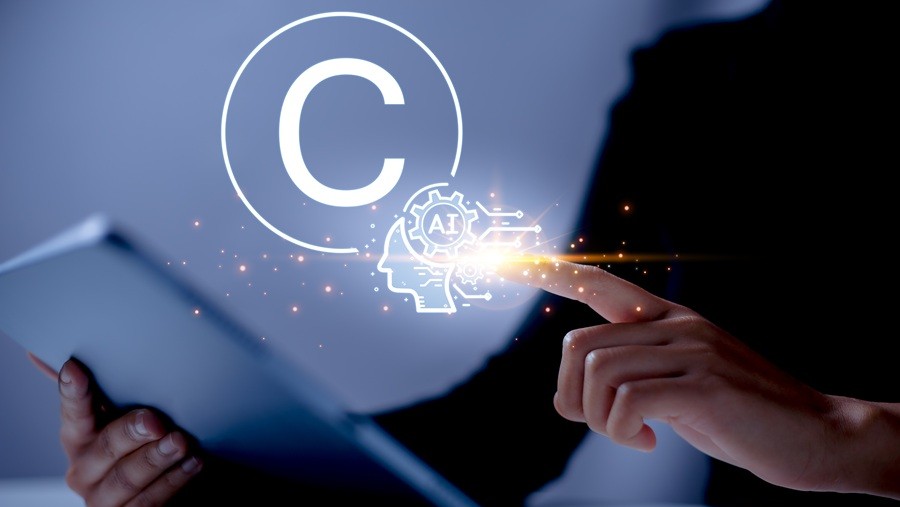
AI continues to receive more than its fair share of column inches as progress continues apace and the law inevitably struggles to keep up with developments in technology. However, the Government’s desire to make the UK one of the nations at the forefront of AI innovation and to attract investment into the economy, has highlighted both the need for regulation of AI and also the delicate balancing act that is required to ensure that a culture of technical innovation is fostered while protecting the rights of those that will be affected by the increased use of artificial intelligence. This is particularly so for individuals and organisations who have created and who own works which are protected by copyright.
In June of last year, the Data (Use and Access) Act 2025 passed into law. The original intention for that piece of legislation had been to provide a framework which would allow developers of AI systems to use data in the public domain for the purposes of training AI models. The difficulty with that proposition was that a framework was also required to ensure that copyright holders did not lose the benefit of the works which they had been created. Many rights holders had significant concerns that their work could be used, modified, adapted and commercialised by the owners of AI models without appropriate recognition or compensation to those who had created those works.
While various options for regulation were considered, which would provide varying degrees of safeguards for rights owners, Parliament could not ultimately reach an agreed position on the legislative provisions which would set out what rights could be used by AI developers and how those rights could be protected. Ultimately, the copyright and AI provisions were dropped from the Act prior to receiving Royal Assent last year.
Notwithstanding the removal of the contentious sections of the Act, work continued to try to find a solution that was acceptable to both AI developers and rights holders. As part of that work, the Government had undertaken to provide a report on copyright and artificial intelligence following extensive public consultation. That report was published in March 2026 and considered the options which had been proposed by the Government for regulating the use of copyright for training AI models.
The Government has previously set out 4 options which were:
Introduction of a data mining exception with an opt out for rights holders was the Government’s preferred solution, and was considered by the Government to be an acceptable middle ground. However, significant concerns had been raised about the ability of organisations and, individuals in particular, to exercise the right to opt out. How rights holders would be able to opt out of having their work used in the training of AI models in practice was unclear. Similarly, there was scant detail about how the opt out right would be policed and enforced. This gave rise to serious concerns that copyright works would simply be used without the rights holder’s permission.
The Government report was intended to provide some clarity as to which of the options considered were likely to be the most workable taking into account feedback which had been received from a number of creators, rights holders, developers, academics, researchers and cultural organisations.
While many might have hoped that the report would provide a basis for some substantive legislation, the report instead concludes that the Government’s preferred option was not widely supported and, as such, the report concludes that further consideration needs to be given to a workable and balanced framework and, as such, none of the options will be taken forward at this time. While many rights holders may be relieved that they will not be faced with the challenges which would undoubtedly come with trying to exercise a right to “opt out”, the upshot is that it will be some time before there is any comprehensive legislation in this area.
The report does, however, highlight one positive opportunity in that it recognises the growing use (and in some cases deeply concerning use) of impersonation through AI, including the use of deep fakes – not just of concern to artists and rights holders, but also significantly for individuals who have been the subject of “revenge porn”.
Following in the footsteps of the Danish Government, the UK Government has highlighted this as an area which also requires reform and the report highlights the need to consider whether a new “personality right” should be given legal status. Whilst “image rights” are often discussed, there is no such concept in UK law and those who are affected by AI generated fake content often have to fall back on claims of infringement of privacy and defamation for any recourse.
The introduction of a new “personality right” using a similar model to that adopted in Denmark would undoubtedly provide much more protection for those who have suffered as a result of AI impersonation. While many will see this as a very positive development, it seems likely that any personality right will, much like the regulation of AI and copyright, take some time to make it onto the statute books and by that time there will no doubt be further significant developments in technology.


© 2026 BTO Solicitors LLP | V.A.T. No: 260371482 | All rights reserved.
Stay informed