

Awaab’s Law – A Scottish perspective
Tenant safety has rightly remained a priority for Regulators in the aftermath of Grenfell. At the same time, duty-holders in all sectors have experienced a series of challenges that they…
READ MORE

The data underscores persistent issues, particularly around mental health, that continue to cause significant difficulties to workers themselves, leaving a lasting effect on businesses.
It is estimated that 1.9 million workers suffered from work-related ill health during 2024/25. While this figure is broadly consistent with previous years, it remains higher than pre-pandemic levels recorded in 2018/19.
Mental health conditions continue to be a key factor in work-related ill health. The data shows that 964,000 workers reported stress, depression, or anxiety caused or worsened by work, a trend that has steadily increased over recent years. This highlights the growing need for organisations to prioritise mental wellbeing alongside more traditional measures used to address risks to health and safety.
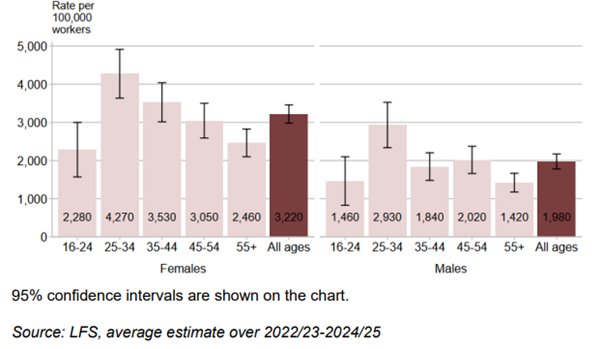
The data illustrates the rate of self-reported work-related stress, depression or anxiety by age and gender per 100,000 workers for new and longstanding ill health. It shows that employees between the age of 25-34 are the predominant demographic suffering from work-related stress, depression or anxiety:
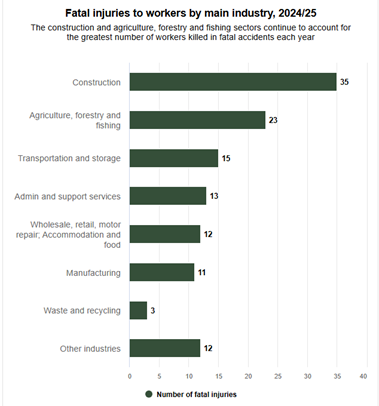
The HSE published data shows that 124 workers lost their lives in the UK due to workplace incidents in 2024/25. The statistics show the frequency of fatal incidents across industry sectors, with construction remaining the most high-risk sector in line with previous years:
There were an estimated 680,000 self-reported non-fatal injuries, with 22% of that figure resulting in over 7 days absence from work.
Work-related ill health and injuries led to an estimated 40.1 million working days lost in 2024/25. The scale of this disruption not only affects individual workers but also places considerable strain on businesses and the economy.
The financial impact of workplace health and safety challenges is significant. In 2023/24, the estimated annual cost of workplace injuries and new cases of work-related ill health reached £22.9 billion. This figure underlines how investing in proactive health and safety measures is not only advantageous from a moral perspective but is has an economic benefit.
While progress has been made in mitigating and reducing workplace fatalities and injuries, the continued rise of stress, anxiety and depression at work requires attention.
HSE Chief Executive Sarah Albon emphasised that, despite over 50 years of health and safety regulation, “workplace health challenges persist, particularly around mental health.” She stressed the importance of supporting businesses to create healthier working environments and continuously improving safety standards across the country.
Employers can respond by:
For workers, being aware of mental health risks, reporting concerns, and accessing support are crucial steps toward maintaining wellbeing.
At BTO we have a dedicated team to assist with Regulatory matters. Our team can conduct an audit of your business’ policies and procedures, to highlight vulnerabilities and any gaps in your systems.


© 2026 BTO Solicitors LLP | V.A.T. No: 260371482 | All rights reserved.
Stay informed